Design research works






How design might help reduce smoking
How design might help reduce smoking
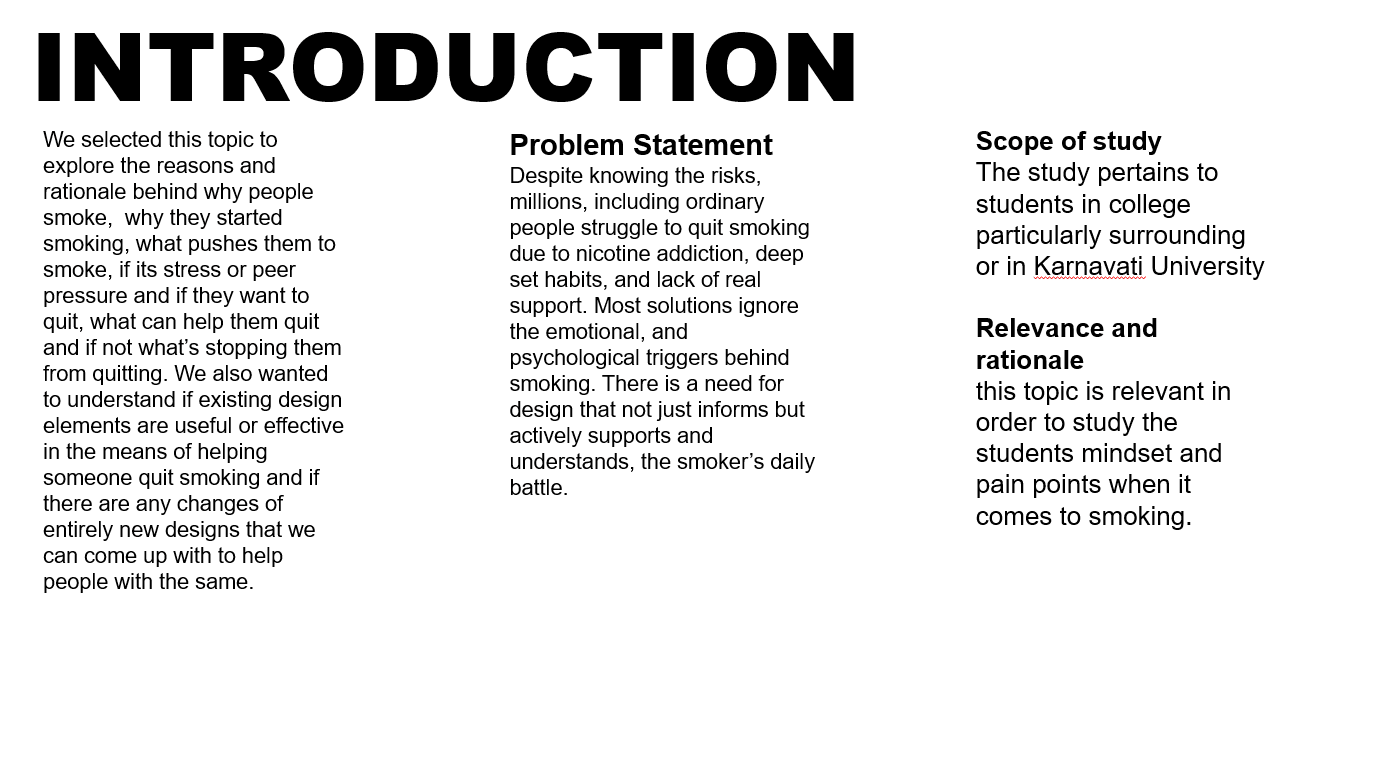
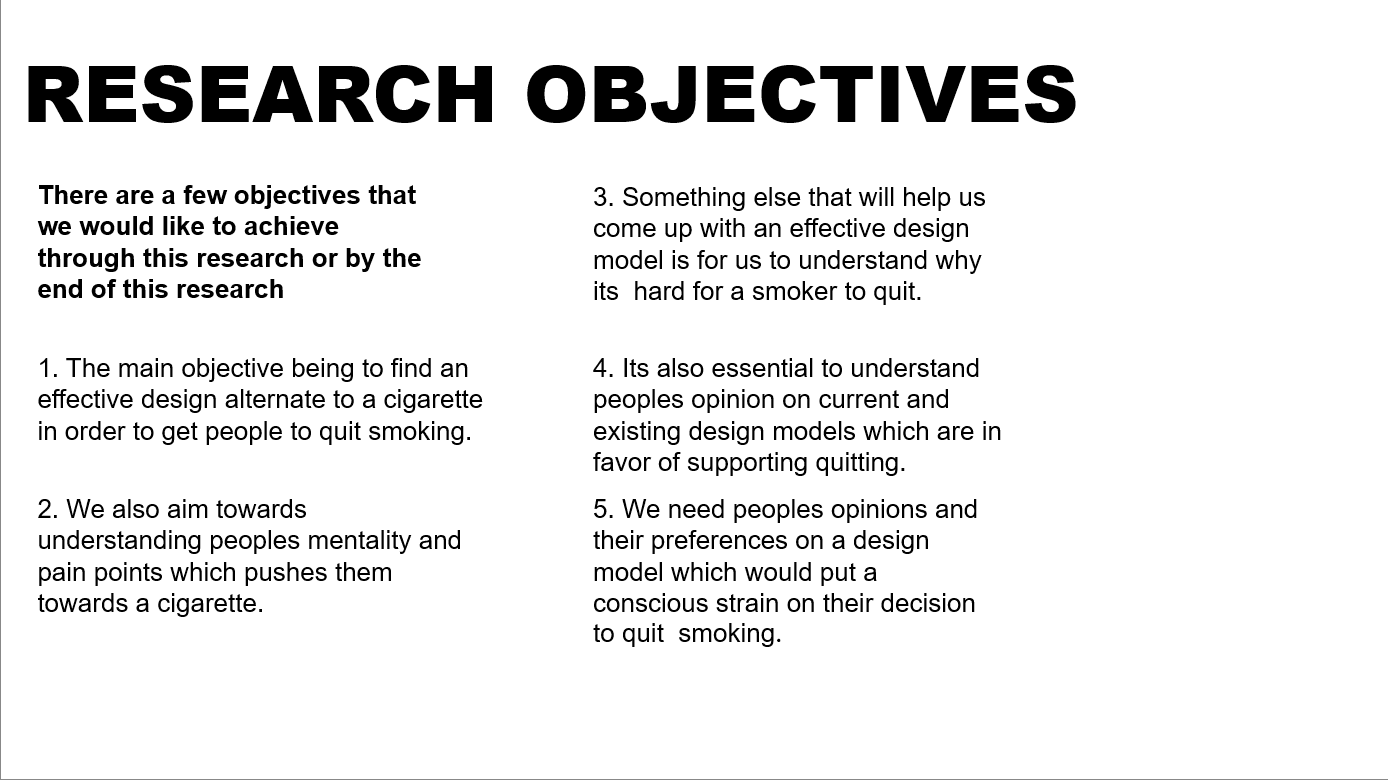
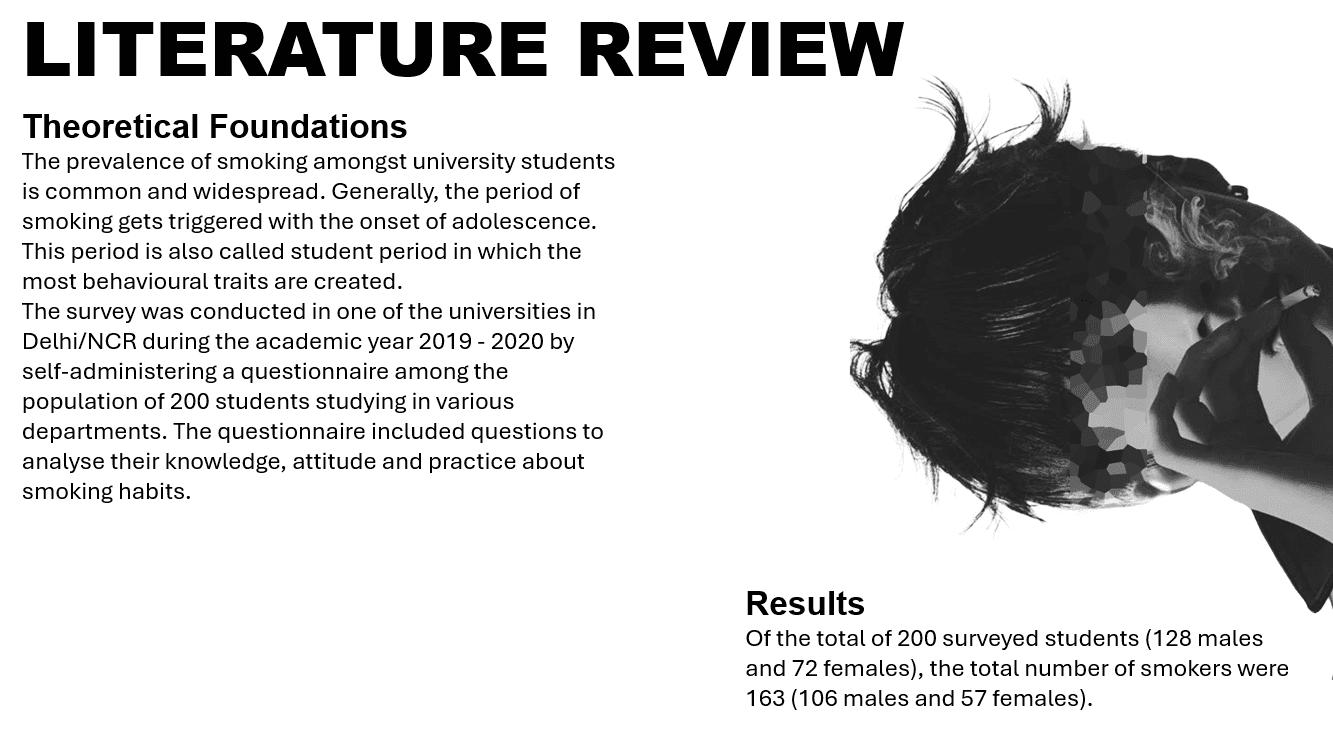
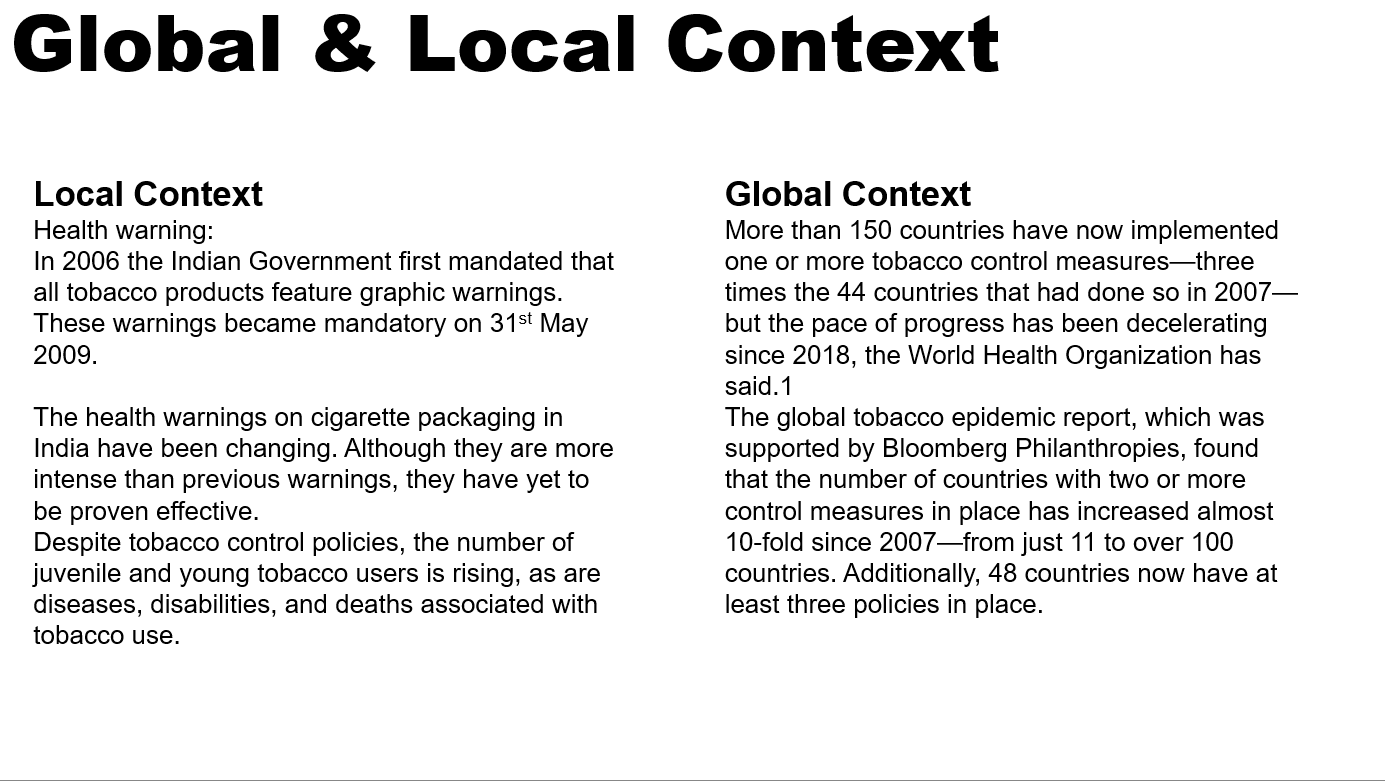
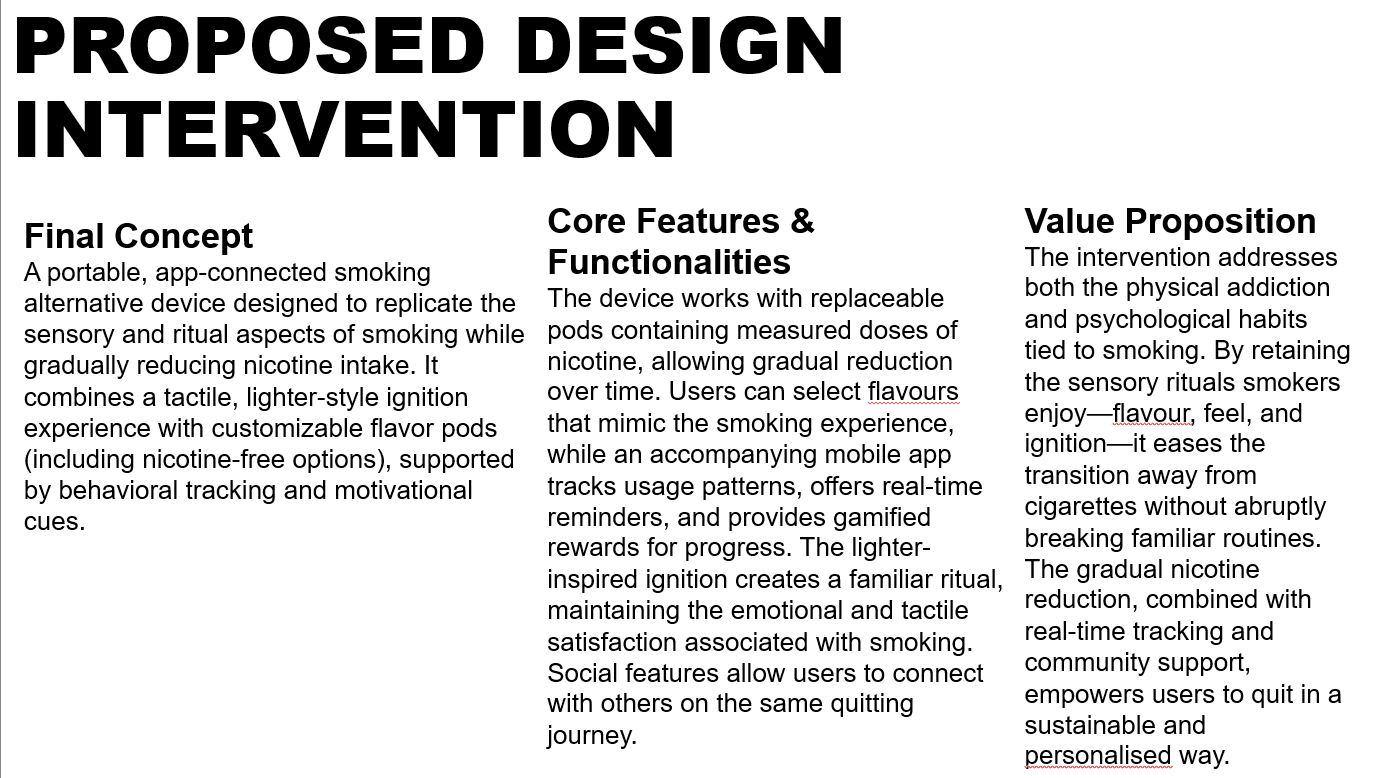
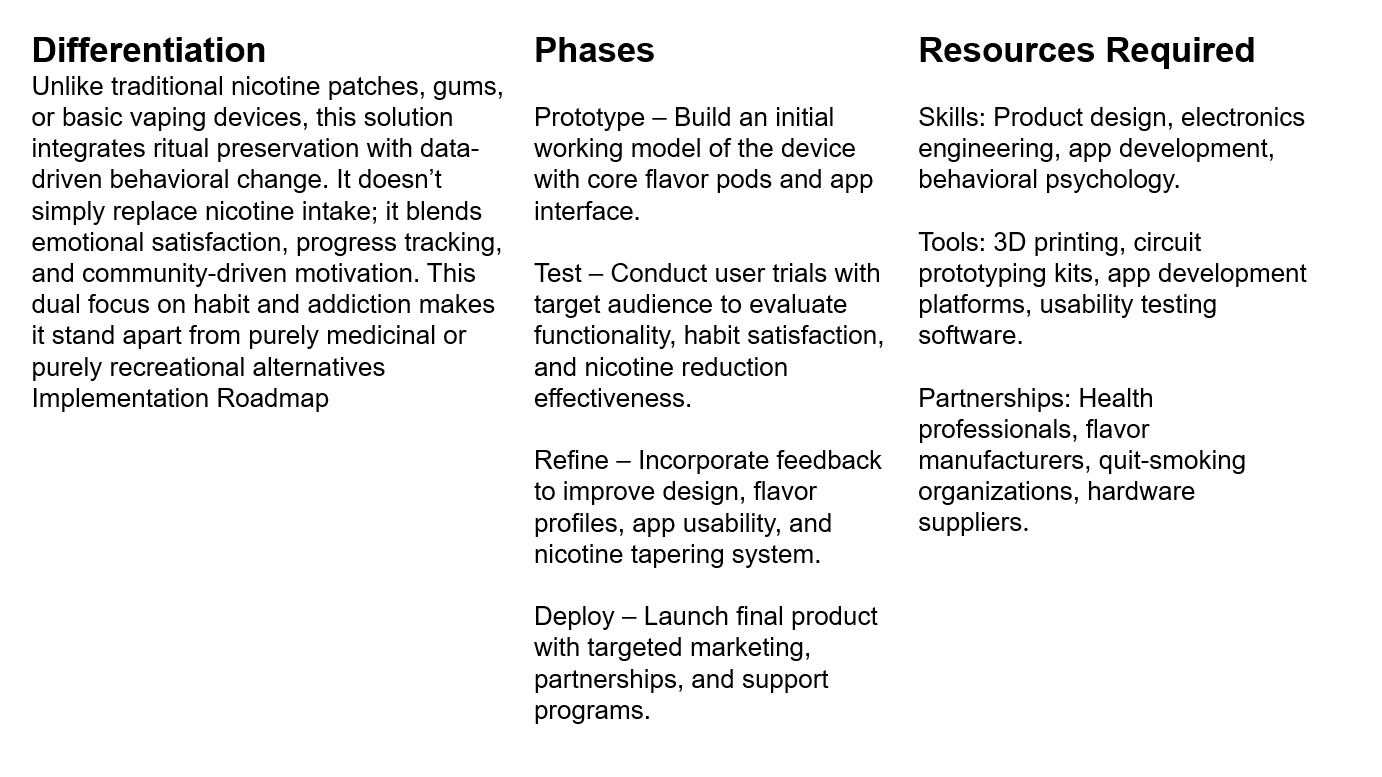
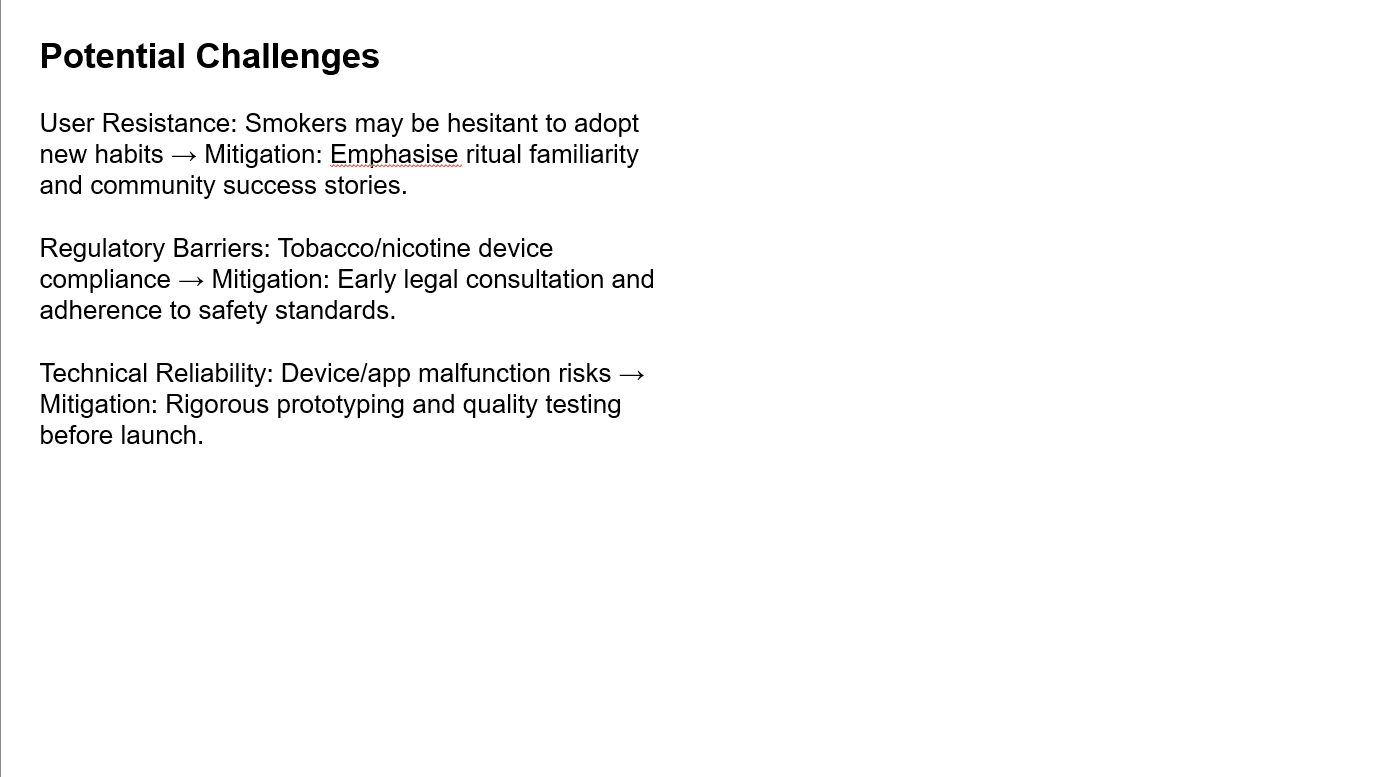
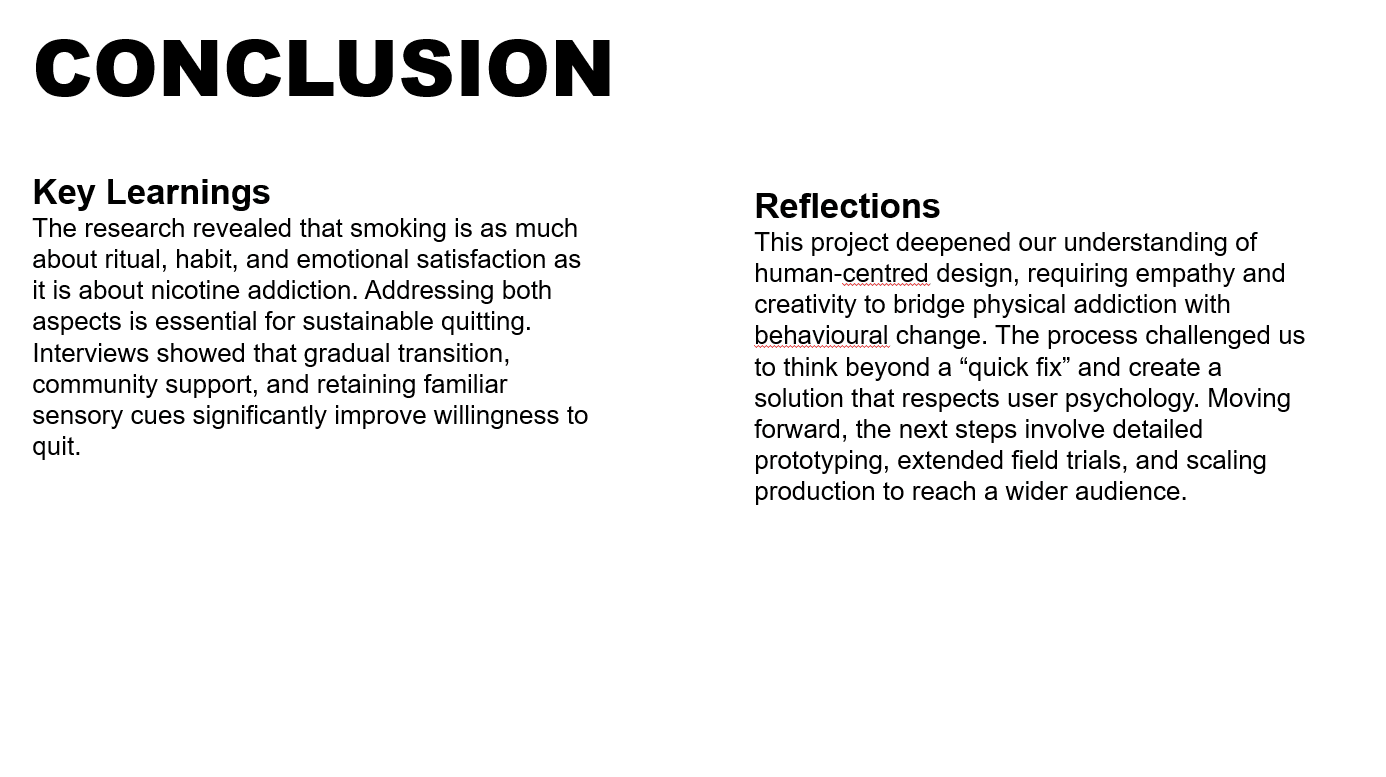
Design Research formed the foundation of my project exploring the question: How might design help reduce smoking? The objective was
to move beyond assumptions and understand the behavioral, psychological, and social dimensions influencing smoking habits before
proposing any intervention.
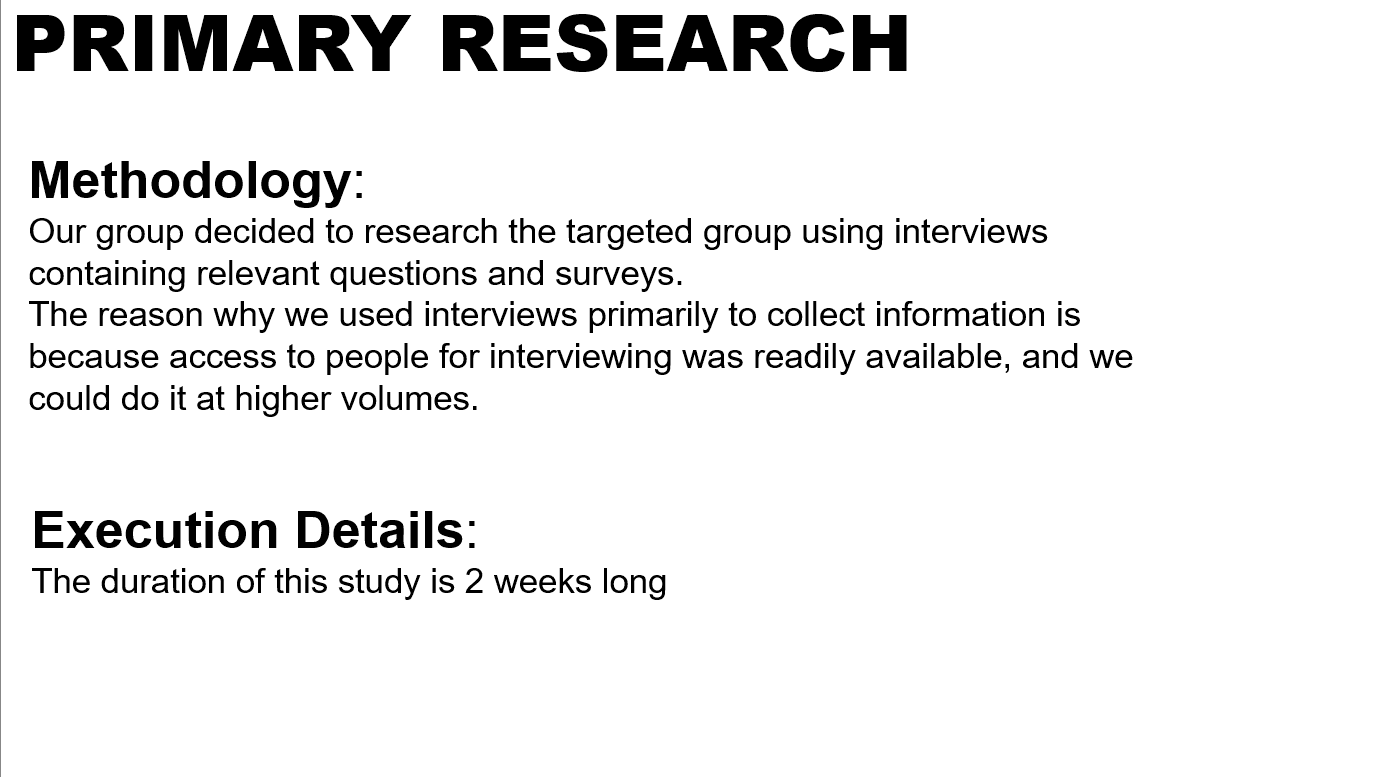
The process began with secondary research, analyzing academic studies, behavioral theories, existing anti-smoking campaigns, and
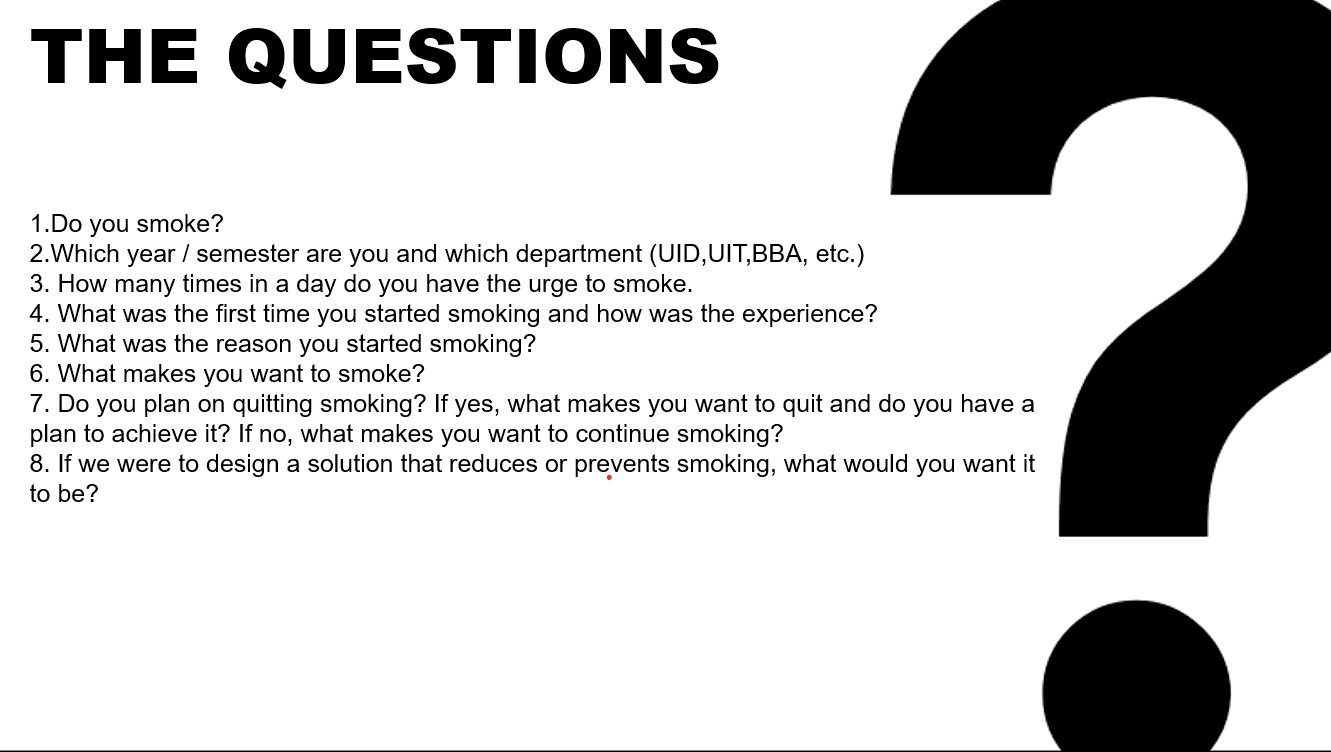
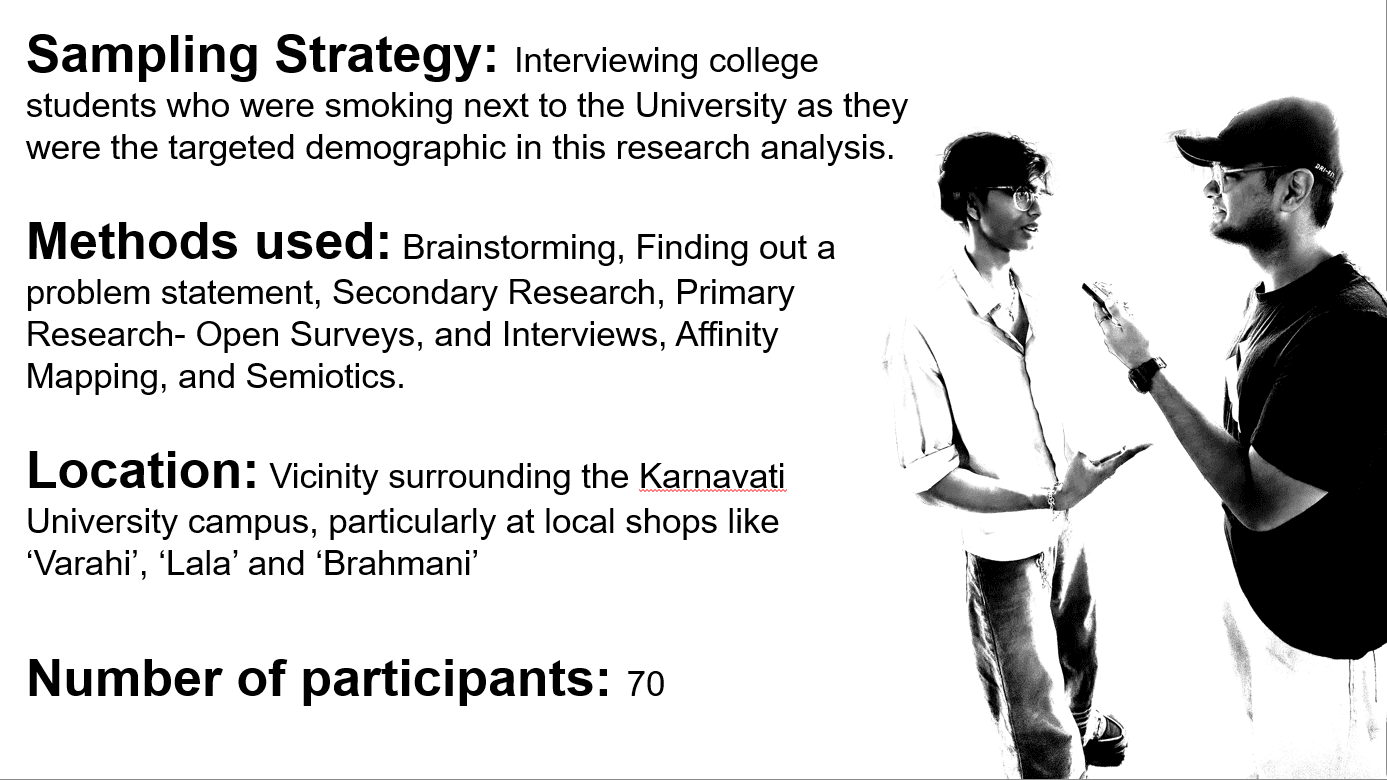
public health data to establish context and identify gaps. This was followed by primary research, including user interviews and structured
data collection, to uncover real motivations, triggers, and barriers experienced by individuals.
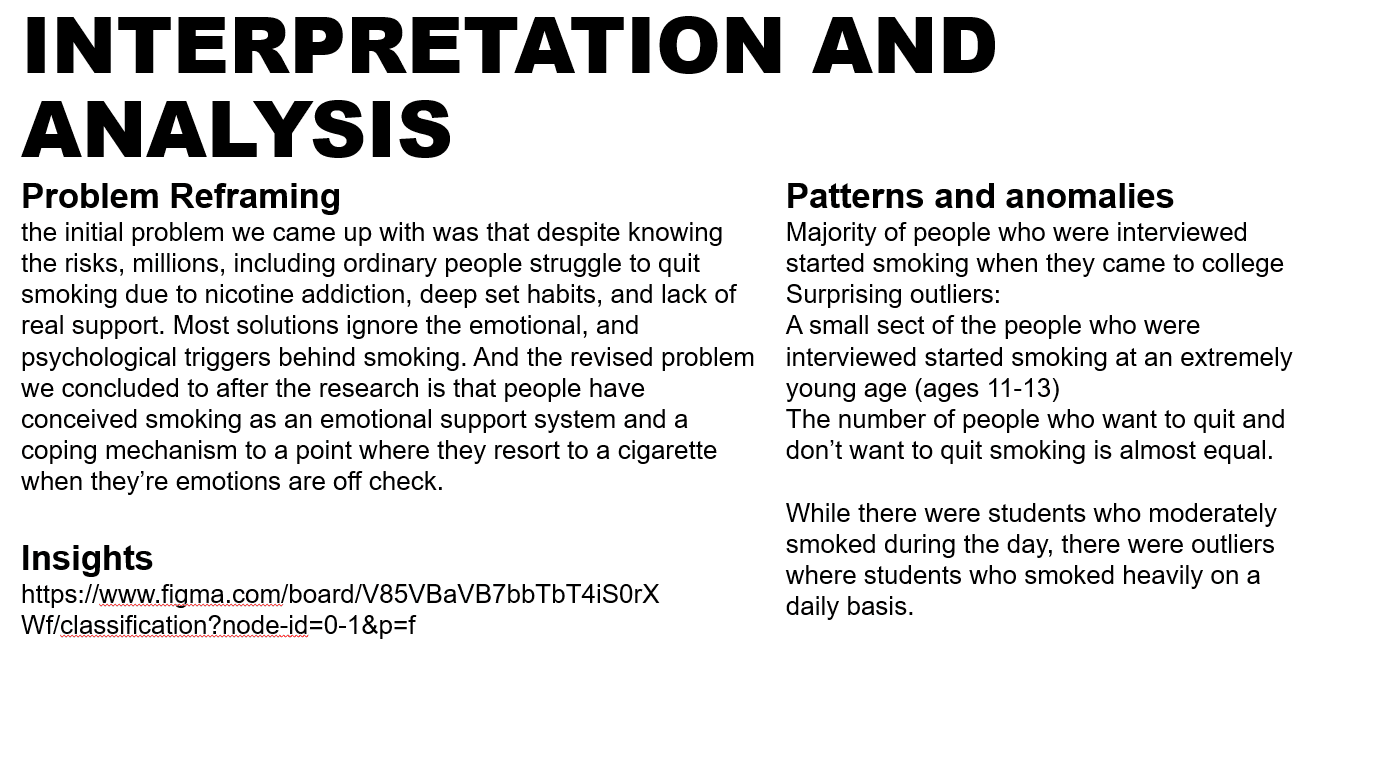
Insights were synthesized through thematic grouping and problem reframing, leading to clearly defined opportunity areas. Based on these
findings, concept directions were developed and evaluated against feasibility, impact, and alignment with research insights.
Design Research formed the foundation of my project exploring the question: How might design help
reduce smoking? The objective was to move beyond assumptions and understand the behavioral,
psychological, and social dimensions influencing smoking habits before proposing any intervention.
The process began with secondary research, analyzing academic studies, behavioral theories,
existing anti-smoking campaigns, and public health data to establish context and identify gaps.
This was followed by primary research, including user interviews and structured data collection,
to uncover real motivations, triggers, and barriers experienced
by individuals.
Insights were synthesized through thematic grouping and problem reframing, leading to clearly
defined opportunity areas. Based on these findings, concept directions were developed and
evaluated against feasibility, impact, and alignment with
research insights.
Design Research formed the foundation of my project exploring
the question: How might design help reduce smoking? The
objective was to move beyond assumptions and understand the
behavioral, psychological, and social dimensions influencing
smoking habits before proposing any intervention.
The process began with secondary research, analyzing academic
studies, behavioral theories, existing anti-smoking campaigns, and
public health data to establish context and identify gaps. This was
followed by primary research, including user interviews and
structured data collection, to uncover real motivations, triggers,
and barriers experienced
by individuals.
Insights were synthesized through thematic grouping and problem
reframing, leading to clearly defined opportunity areas. Based on
these findings, concept directions were developed and
evaluated against feasibility, impact, and alignment with
research insights.
Design Research formed the foundation of my project exploring the question: How might design help reduce smoking?
The objective was to move beyond assumptions and understand the behavioral, psychological, and social dimensions
influencing smoking habits before proposing any intervention.
The process began with secondary research, analyzing academic studies, behavioral theories, existing anti-smoking
campaigns, and public health data to establish context and identify gaps. This was followed by primary research,
including user interviews and structured data collection, to uncover real motivations, triggers, and barriers experienced
by individuals.
Insights were synthesized through thematic grouping and problem reframing, leading to clearly defined opportunity areas.
Based on these findings, concept directions were developed and evaluated against feasibility, impact, and alignment with
research insights.


Exploring Jodhpur
Exploring Jodhpur
Jodhpuri Diaries was an immersive field research project conducted in Jodhpur as part of the Discover Design in India module at UID.
The objective was to document and analyze the traditional craft of Juthi embroidery through direct engagement with artisans,
contextual study, and cultural observation.
The research process included on-site visits, interviews with artisan families, documentation of tools, materials, techniques, pricing
structures, and present-day challenges. Beyond technical documentation, the project also examined socio-economic realities,
generational transitions, and the sustainability concerns surrounding handcrafted practices.
The final outcome was a curated research booklet combining ethnographic observation, visual documentation, craft analysis,
and reflective insights, converting field research into a structured editorial format.
Jodhpuri Diaries was an immersive field research project conducted in Jodhpur as part of
the Discover Design in India module at UID. The objective was to document and analyze the
traditional craft of Juthi embroidery through direct engagement with artisans, contextual
study, and cultural observation.
The research process included on-site visits, interviews with artisan families, documentation of
tools, materials, techniques, pricing structures, and present-day challenges. Beyond technical
documentation, the project also examined socio-economic realities, generational transitions, and
the sustainability concerns surrounding handcrafted practices.
The final outcome was a curated research booklet combining ethnographic observation, visual
documentation, craft analysis, and reflective insights, converting field research into a structured
editorial format.
Jodhpuri Diaries was an immersive field research project conducted
in Jodhpur as part of the Discover Design in India module at UID. The
objective was to document and analyze the traditional craft of Juthi
embroidery through direct engagement with artisans, contextual
study, and cultural observation.
The research process included on-site visits, interviews with artisan
families, documentation of tools, materials, techniques, pricing
structures, and present-day challenges. Beyond technical
documentation, the project also examined socio-economic realities,
generational transitions, and the sustainability concerns surrounding
handcrafted practices.
The final outcome was a curated research booklet combining
ethnographic observation, visual documentation, craft analysis,
and reflective insights, converting field research into a structured
editorial format.
Jodhpuri Diaries was an immersive field research project conducted in Jodhpur as part of the Discover Design in India
module at UID. The objective was to document and analyze the traditional craft of Juthi embroidery through direct
engagement with artisans, contextual study, and cultural observation.
The research process included on-site visits, interviews with artisan families, documentation of tools, materials,
techniques, pricing structures, and present-day challenges. Beyond technical documentation, the project also
examined socio-economic realities, generational transitions, and the sustainability concerns surrounding
handcrafted practices.
The final outcome was a curated research booklet combining ethnographic observation, visual documentation,
craft analysis, and reflective insights, converting field research into a structured editorial format.