Design research

00

An introduction to the module
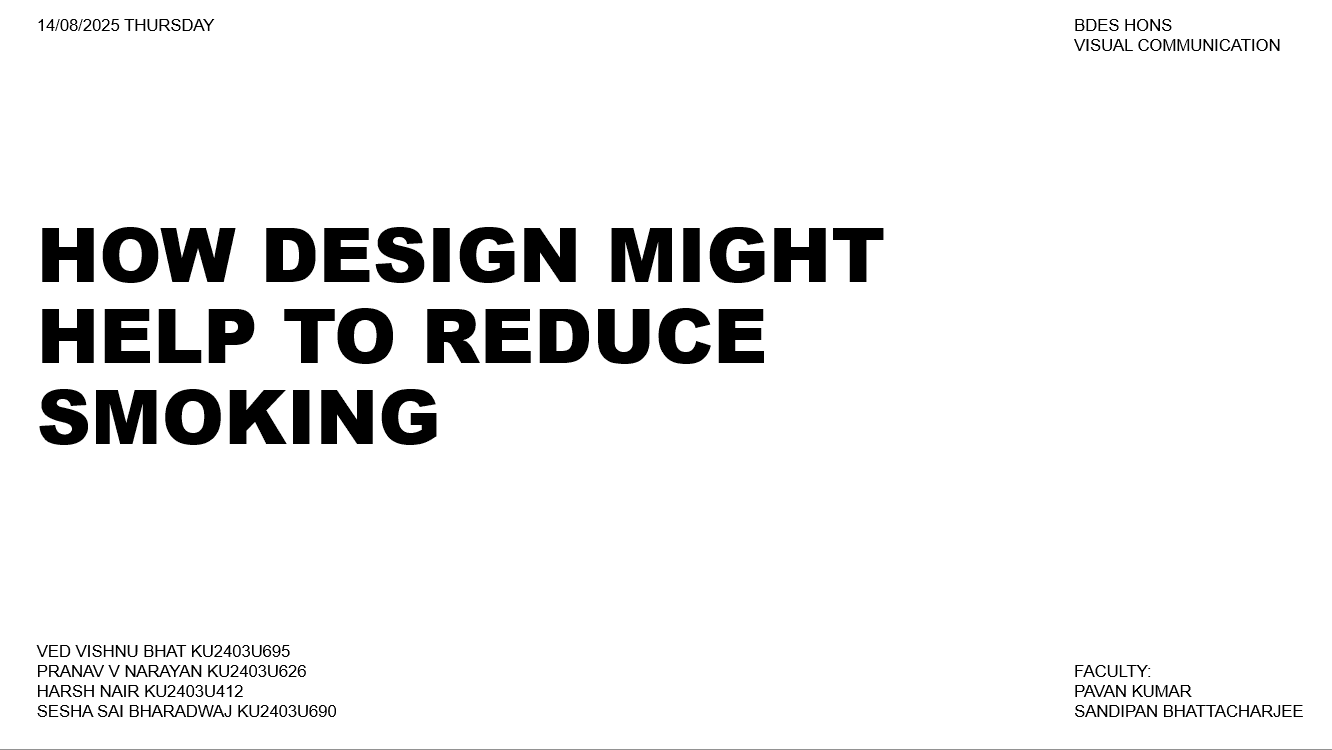
The Design Research module focused on understanding how structured inquiry informs meaningful design decisions. Our final project explored the question: How might design help reduce smoking? Through this project, we applied a systematic research process that moved from problem identification to concept-level design intervention.
Module length: 11 days
We began with extensive secondary research, reviewing academic literature, behavioral studies, public health data, and existing anti-smoking campaigns to build contextual understanding. This helped us frame the scope, define research objectives, and identify gaps in existing approaches.
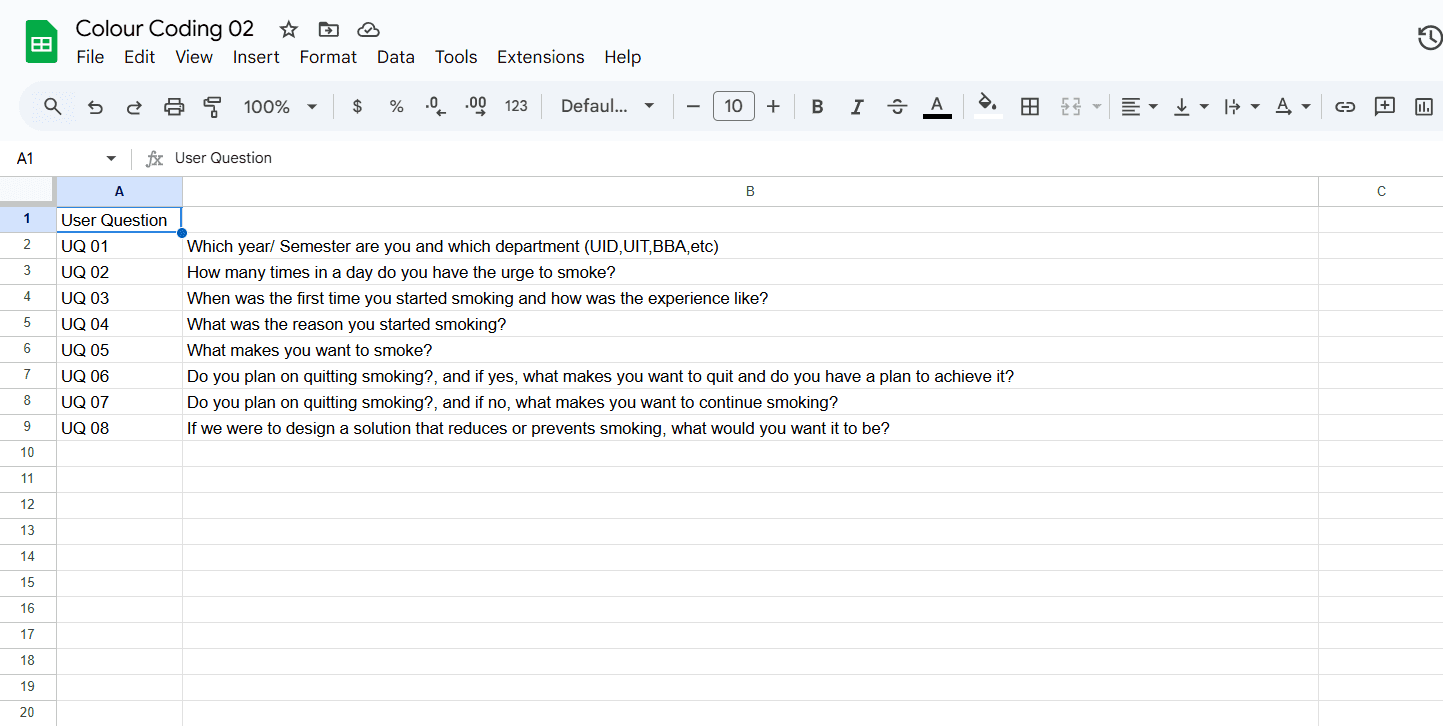
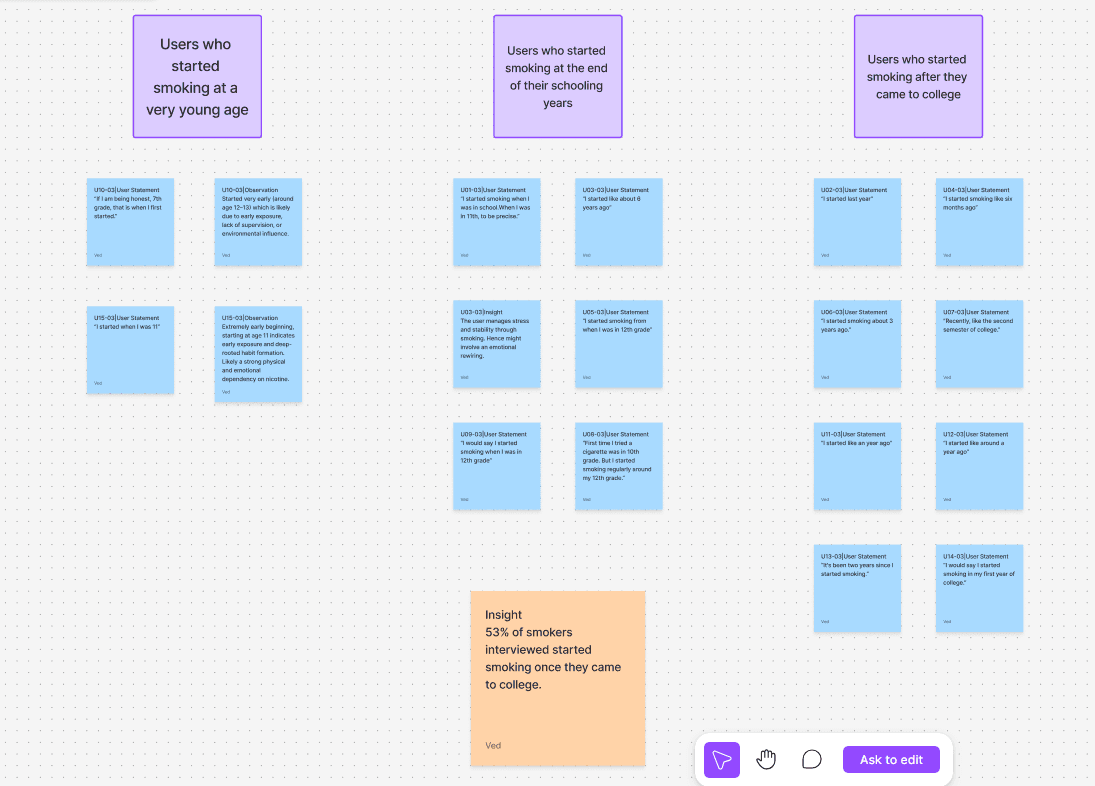
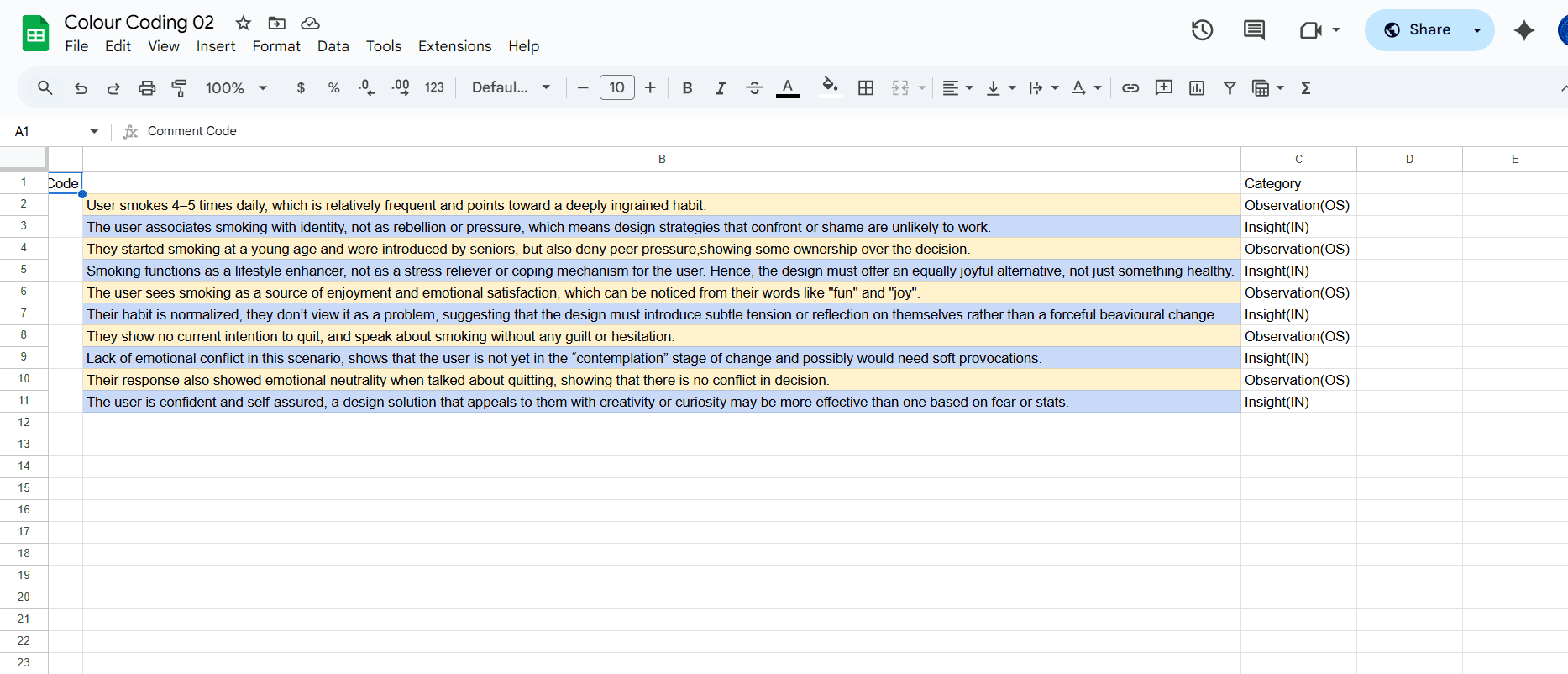
We then conducted primary research using qualitative and quantitative methods, including user interviews and data collection, to understand behaviors, motivations, triggers, and barriers associated with smoking. The findings were synthesized into thematic insights, highlighting patterns and unmet needs.
Using analytical frameworks, we reframed the problem and identified key opportunity areas. The ideation phase involved structured brainstorming and evaluation processes to generate viable concepts. From this, we developed and refined concept directions, eventually proposing a design intervention supported by research-backed rationale, defined features, and a clear value proposition.
This module strengthened my ability to translate research insights into actionable design strategies, ensuring that creative solutions are grounded in evidence, critical thinking, and user understanding rather than assumptions.
The Design Research module focused on understanding how structured inquiry informs meaningful design decisions. Our final project explored the question: How might design help reduce smoking? Through this project, we applied a systematic research process that moved from problem identification to concept-level design intervention.
Module length: 11 days
We began with extensive secondary research, reviewing academic literature, behavioral studies, public health data, and existing anti-smoking campaigns to build contextual understanding. This helped us frame the scope, define research objectives, and identify gaps in existing approaches.
We then conducted primary research using qualitative and quantitative methods, including user interviews and data collection, to understand behaviors, motivations, triggers, and barriers associated with smoking. The findings were synthesized into thematic insights, highlighting patterns and unmet needs.
Using analytical frameworks, we reframed the problem and identified key opportunity areas. The ideation phase involved structured brainstorming and evaluation processes to generate viable concepts. From this, we developed and refined concept directions, eventually proposing a design intervention supported by research-backed rationale, defined features, and a clear value proposition.
This module strengthened my ability to translate research insights into actionable design strategies, ensuring that creative solutions are grounded in evidence, critical thinking, and user understanding rather than assumptions.